
BET objectives
Specific surface area, monolayer capacity, adsorption behavior, surface accessibility, and material comparison.
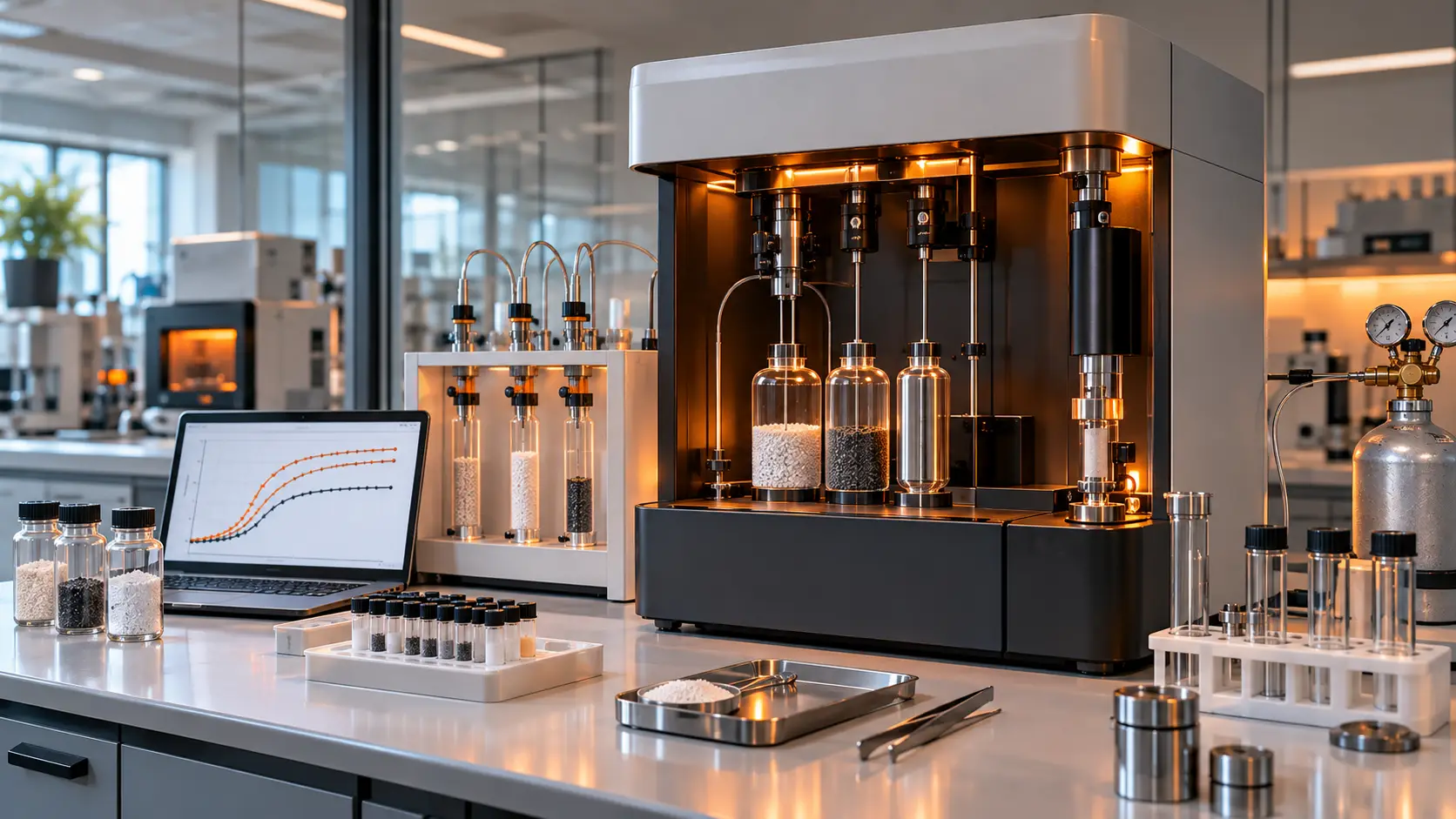
BET surface area analysis measures the accessible specific surface area of powders and porous materials from gas adsorption behavior. Combined porosity analysis can support pore volume, pore-size distribution, adsorption/desorption isotherm, and micro- or mesoporous structure investigations in suitable samples.
Specific surface area, monolayer capacity, adsorption behavior, surface accessibility, and material comparison.
Total pore volume, pore-size distribution, micro- or mesoporous structure, and adsorption/desorption hysteresis.
Share the material, approximate quantity, moisture sensitivity, degassing history, expected pore range, and analysis objective.
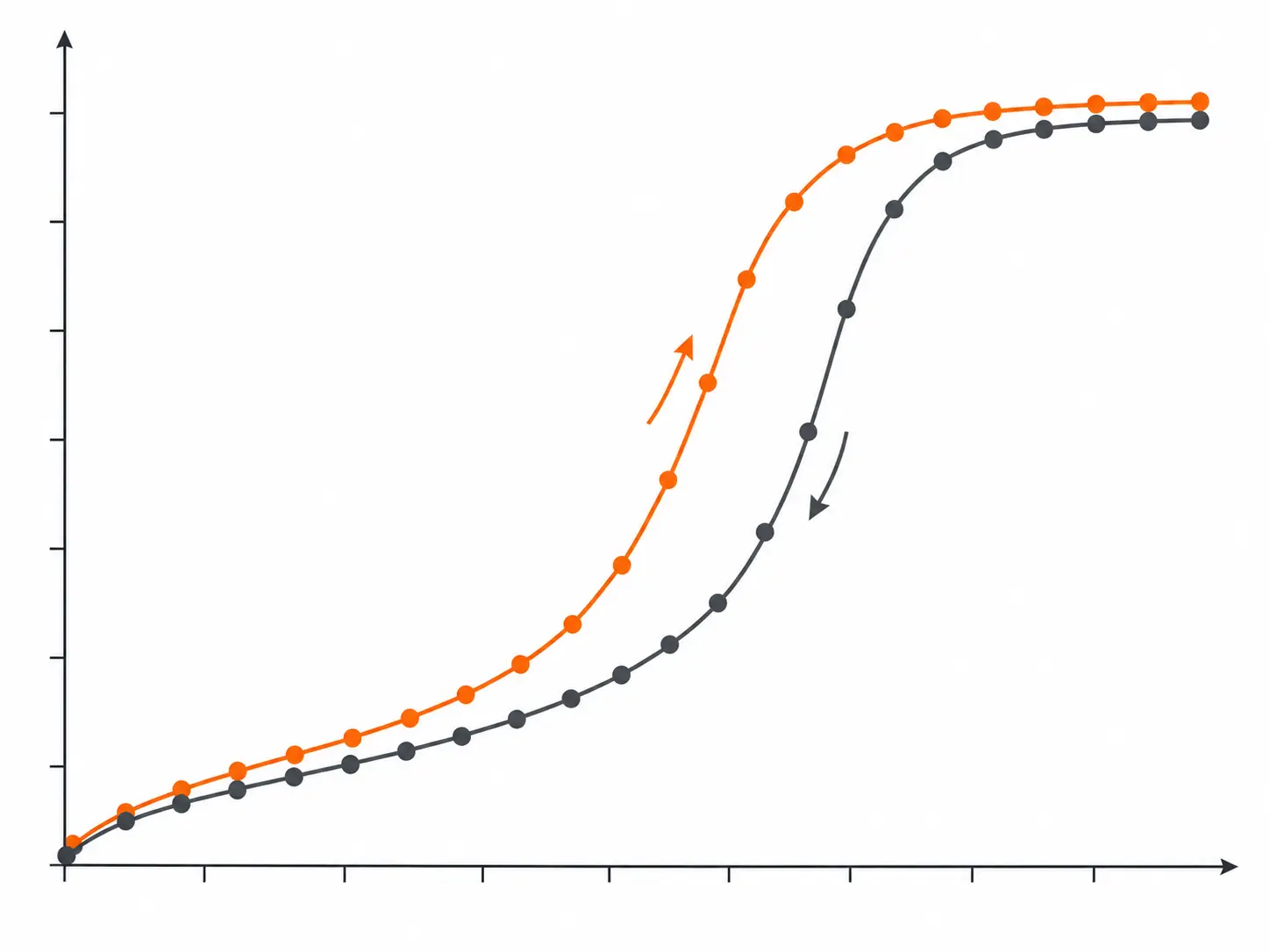
BET analysis evaluates gas adsorption on a material surface to estimate specific surface area. Porosity analysis can extend the interpretation to adsorption/desorption behavior, pore volume, and pore-size distribution.
Results depend on degassing, sample mass, adsorption gas, temperature, equilibration, material chemistry, and the selected calculation model.
The appropriate analysis depends on the material structure, expected pore range, surface chemistry, degassing requirement, and the decisions the data must support.
Estimate accessible surface area for powders, catalysts, adsorbents, ceramics, electrodes, and other suitable porous solids.
Investigate total pore volume and pore-size behavior, including micro- and mesoporous features where suitable.
Interpret isotherm shape, hysteresis, adsorption capacity, and surface accessibility for material comparison and development.
A prepared sample is degassed to remove moisture and volatile species from the accessible surface. A gas is then introduced under controlled conditions and the amount adsorbed at different relative pressures is recorded.
The adsorption and desorption data are used to calculate specific surface area and, where appropriate, pore volume and pore-size distribution.
Tap a component to see its role in BET surface area and porosity analysis.
The sample is degassed, exposed to controlled gas adsorption and desorption, and monitored through pressure or volume changes. The resulting isotherm is interpreted to estimate surface area, pore volume, and pore-size behavior.
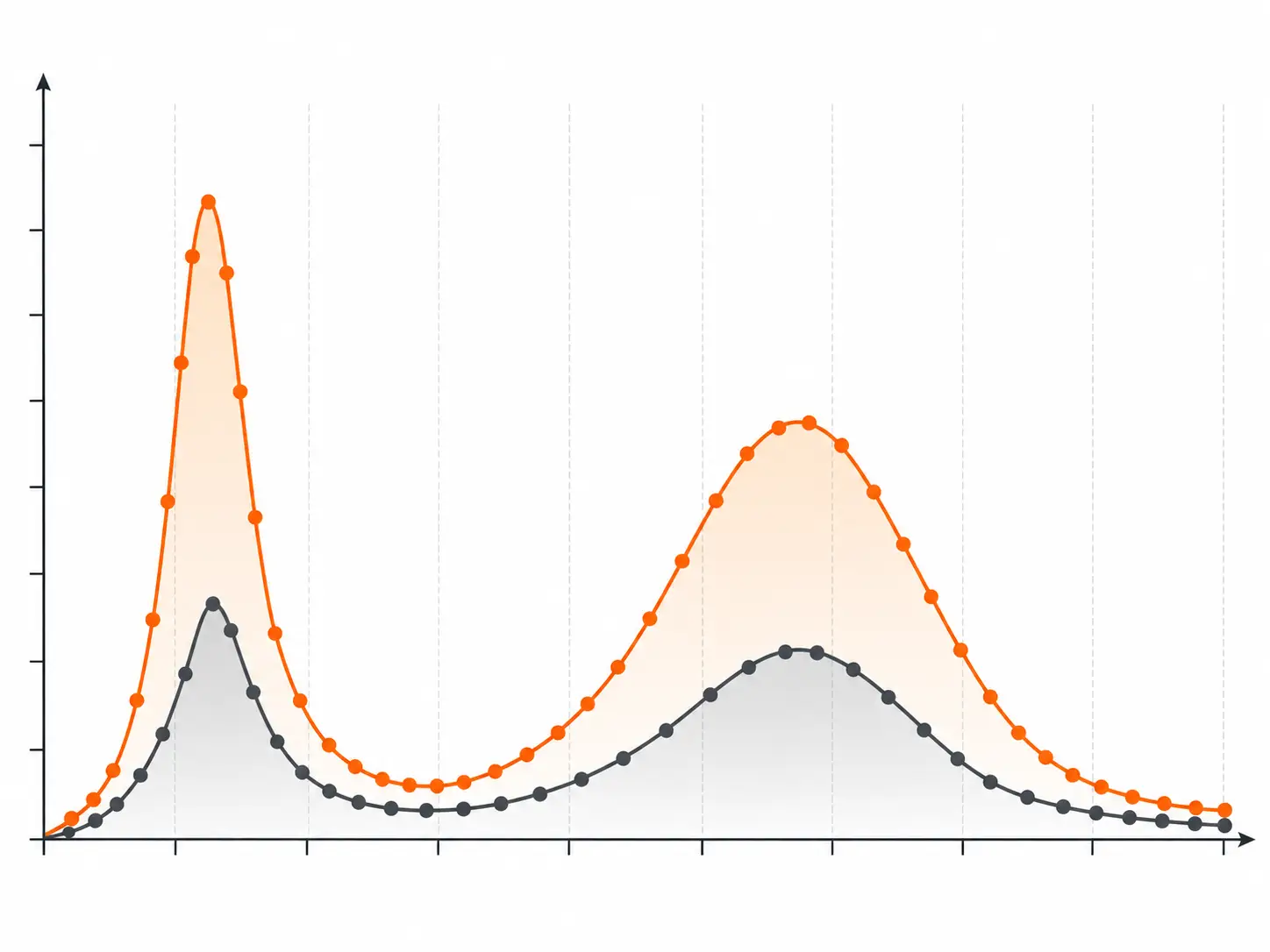
Pore-size distribution helps show how pore volume is distributed across different pore dimensions. This can support comparisons between powders, catalysts, adsorbents, membranes, battery materials, and processed samples.
Interpretation depends on the isotherm, calculation method, degassing, material structure, and whether the pores are open, closed, interconnected, or affected by surface chemistry.
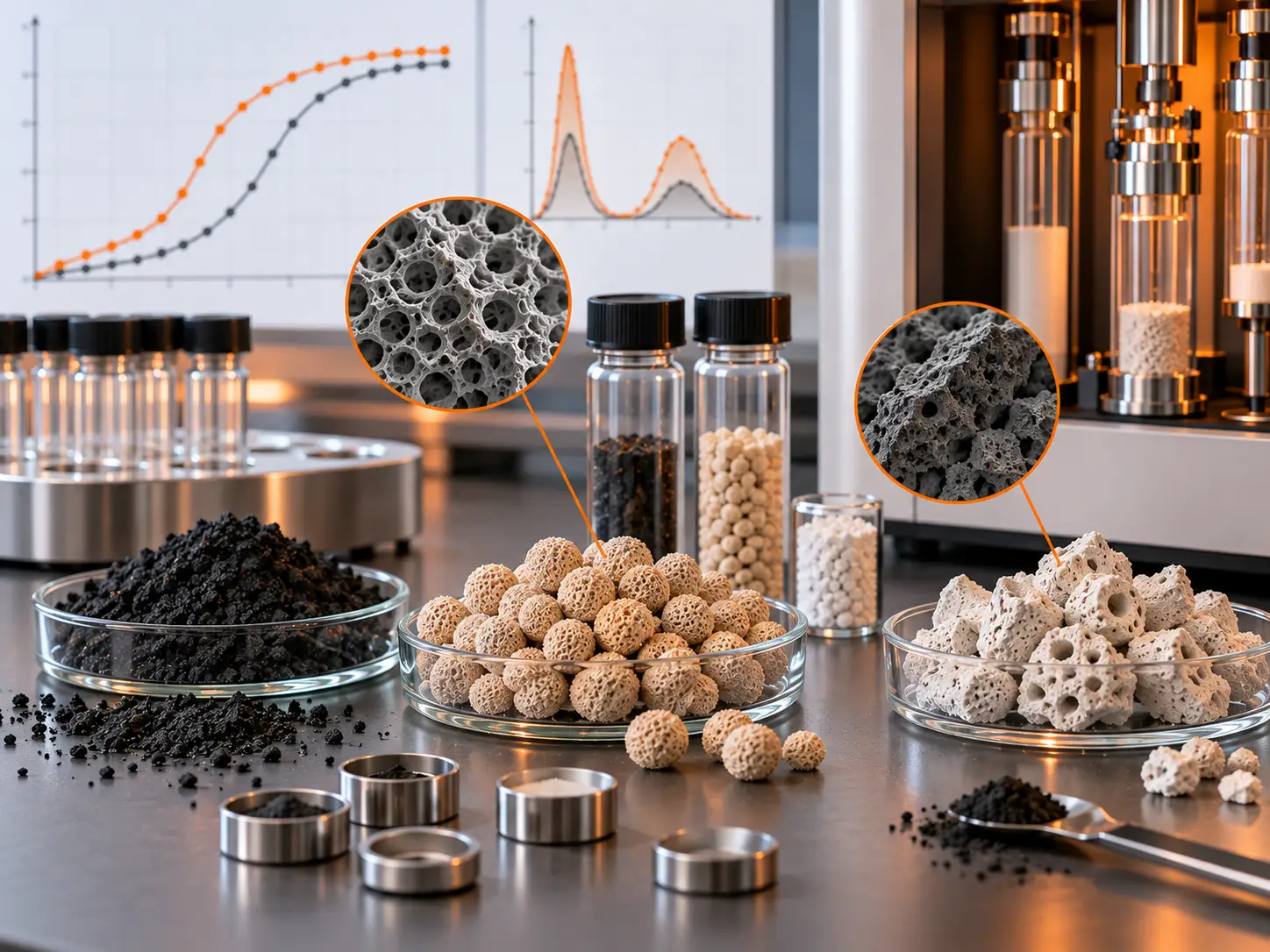
BET is used when accessible surface area and pore structure influence adsorption, reaction, transport, storage, catalysis, or material performance.
Surface area, pore volume, pore distribution, and adsorption-accessible structure.
Surface area and porosity comparison for uptake, filtration, and surface-accessibility studies.
Porous structure, accessible surface, and material comparison for electrode and energy applications.
Pore structure, surface area, processing effects, and material-development comparison.
BET and porosity planning depends on sample quantity, moisture sensitivity, degassing, expected pore range, and the objective. Share the details first so the method can be reviewed.
Tell us the material, available quantity, moisture sensitivity, processing history, and objective.
Our technical team reviews sample quantity, degassing needs, expected pore range, and analysis requirements.
Discuss degassing conditions, adsorption gas, isotherm range, calculation method, and requested outputs.
Receive isotherms, specific surface area, pore-volume data, pore-size distribution, and agreed documentation.
BET analysis is used to estimate the specific surface area of suitable powders and porous materials from gas adsorption behavior. It is commonly used for catalysts, adsorbents, membranes, ceramics, powders, and battery materials.
Porosity analysis can support interpretation of adsorption/desorption isotherms, total pore volume, pore-size distribution, and micro- or mesoporous behavior where the material and calculation method are suitable.
BET may be suitable for powders, catalysts, activated carbon, adsorbents, porous ceramics, membranes, battery materials, electrodes, and other solids with accessible surface area and pores that can be measured under the selected conditions.
Degassing removes moisture and volatile species that may occupy the accessible surface or interfere with gas adsorption. The appropriate degassing condition depends on the material and must avoid changing the structure being measured.
Share the material type, available quantity, moisture sensitivity, processing history, expected surface-area or pore range, and whether you need surface area, porosity, adsorption/desorption, or pore-size analysis.
Share a few details for a technical review, or speak directly with our consultant by phone or WhatsApp.
Just a few details — our technical team will guide you.