
FTIR objectives
Functional-group identification, polymer verification, unknown-material screening, contamination tracing, and chemical comparison.
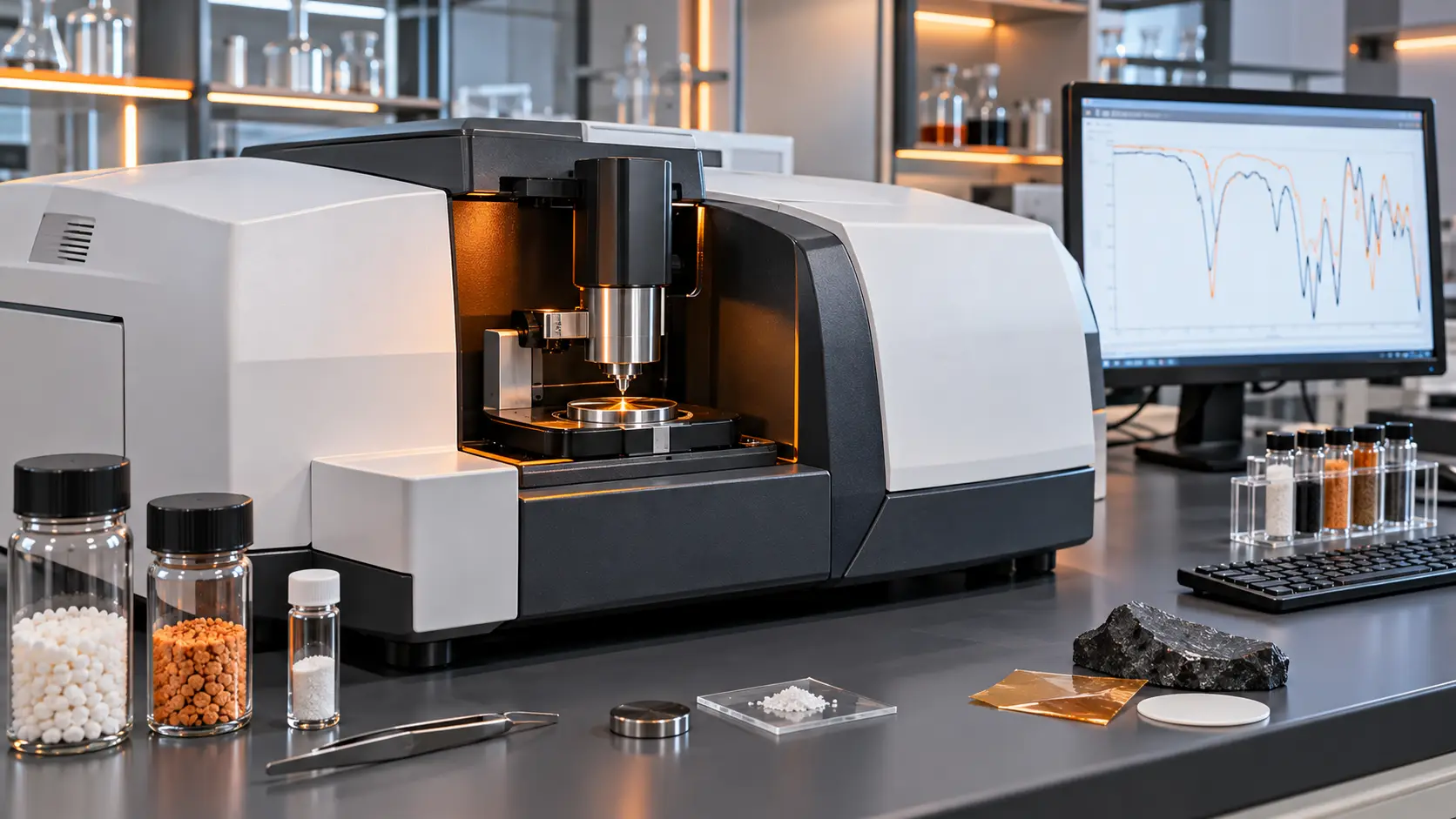
FTIR analysis identifies chemical bonds and functional groups by measuring how a sample absorbs infrared radiation. It can support polymer identification, contamination tracing, coating analysis, chemical comparison, degradation studies, and unknown-material characterization in suitable samples.
Functional-group identification, polymer verification, unknown-material screening, contamination tracing, and chemical comparison.
Polymers, coatings, powders, oils, organic compounds, residues, adhesives, films, fibers, and other suitable samples.
Share the sample type, amount, surface condition, suspected chemistry, reference material, and identification objective.
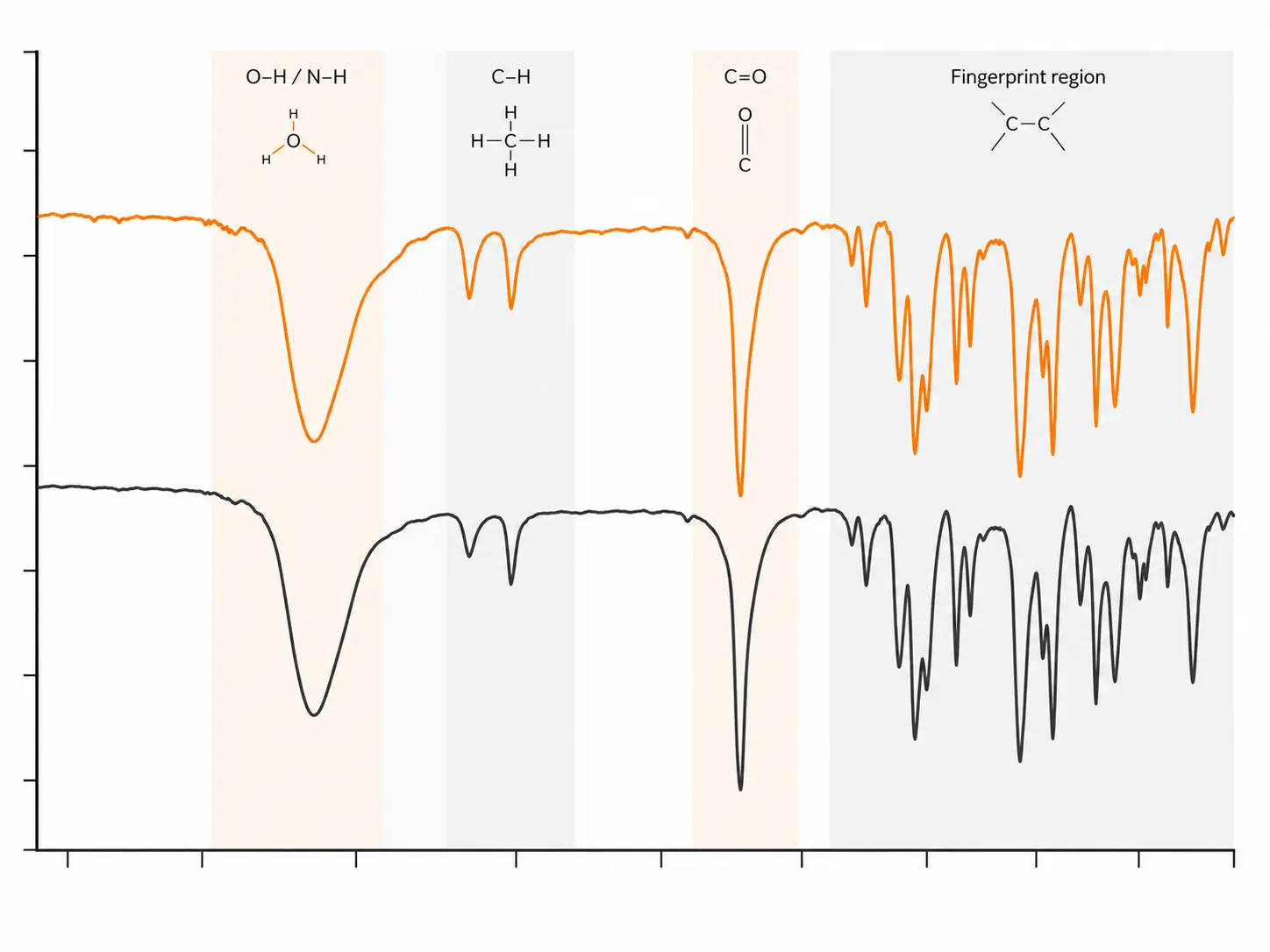
FTIR measures the interaction of infrared radiation with a sample. Chemical bonds absorb specific infrared frequencies, producing a spectrum that can be compared with reference data or interpreted using functional-group assignments.
FTIR interpretation depends on sampling mode, sample thickness, concentration, surface condition, spectral range, resolution, background quality, and reference information.
The appropriate FTIR route depends on sample form, surface condition, chemical question, reference availability, and whether identification or comparison is required.
Interpret characteristic absorption bands to investigate chemical bonds and functional groups in suitable samples.
Compare an unknown or production sample with a reference spectrum to support material identification or verification.
Investigate organic residues, unknown particles, deposits, oils, adhesives, coatings, and process-related contamination where suitable.
Infrared radiation passes through or interacts with the sample, and the instrument records the wavelengths absorbed by the material. An interferometer and Fourier-transform calculation convert the measured signal into an infrared spectrum.
Depending on the sample form, transmission, ATR, reflectance, or another suitable sampling approach may be considered after review.
Tap a component to see its role in FTIR spectroscopy.
Infrared radiation interacts with the sample, chemical bonds absorb selected frequencies, the detector records the signal, and Fourier-transform processing produces a spectrum for functional-group assignment or reference comparison.
An unknown sample spectrum can be compared with a reference spectrum or interpreted using known functional-group regions and fingerprint-region features. Matching peaks may support identification, while differences can indicate contamination, formulation variation, degradation, or a different material.
Confidence in interpretation depends on sample homogeneity, sampling mode, reference quality, concentration, surface condition, and spectral quality.
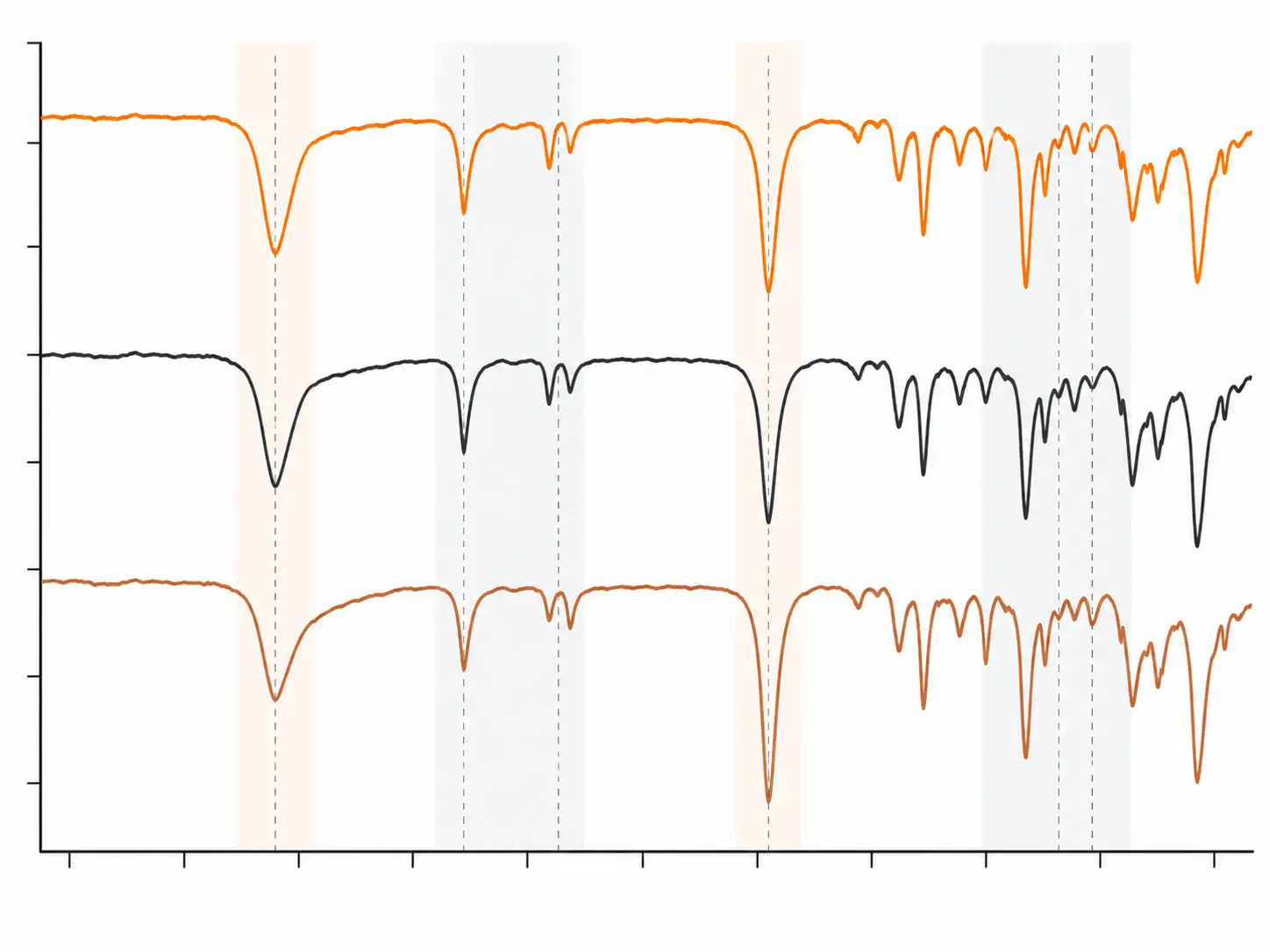
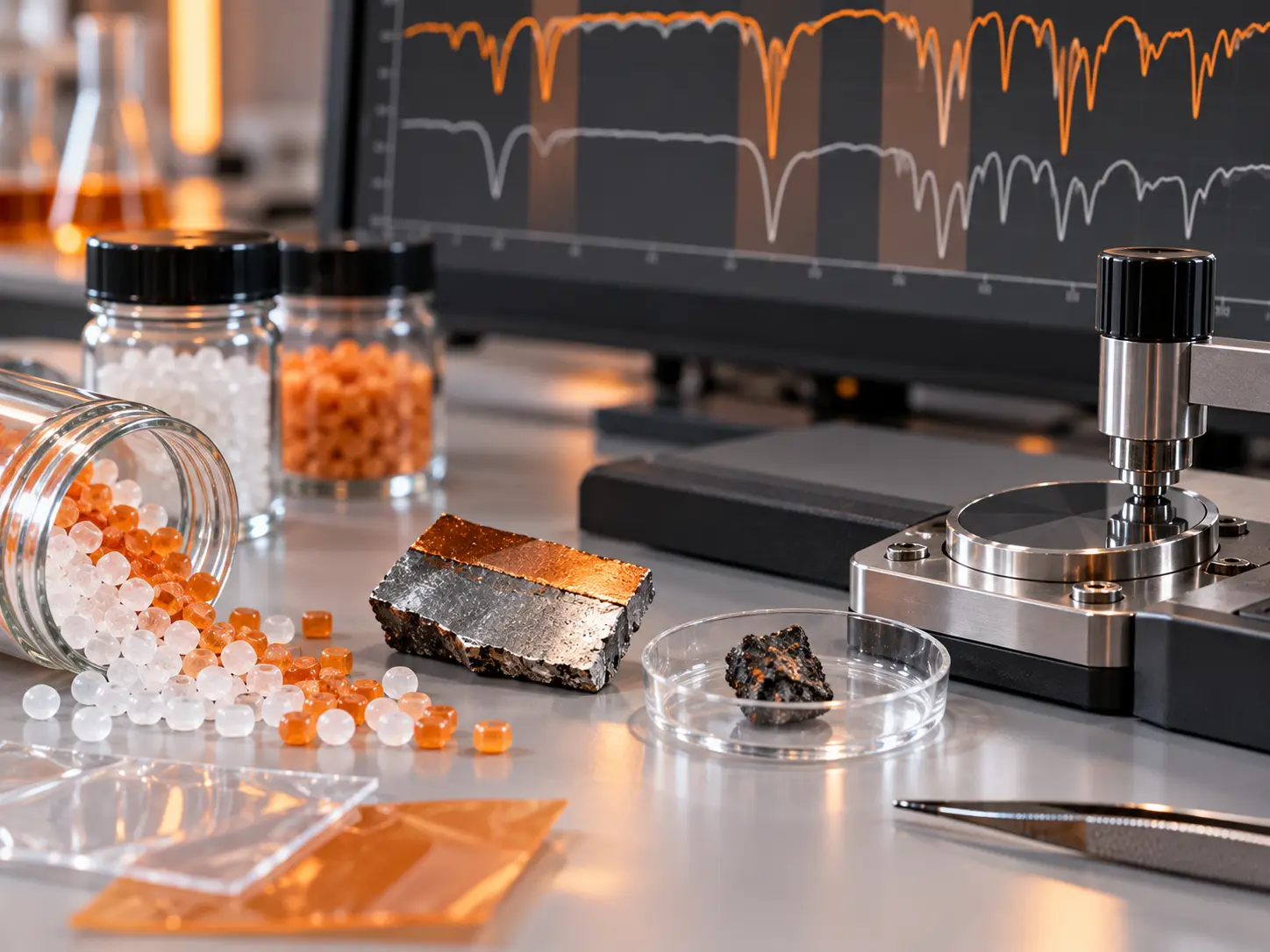
FTIR is used when chemical identity, functional groups, contamination, formulation, or material comparison is central to the investigation.
Material identification, additive or degradation assessment, formulation comparison, and polymer verification.
Organic coating chemistry, residue, surface deposits, binder identification, and curing-related comparison.
Unknown particles, oils, adhesives, deposits, cleaning residues, and process-related organic contamination.
Screening and comparison of unknown organic or molecular materials when the sample form is suitable.
FTIR planning depends on sample form, quantity, surface condition, chemical question, and whether a reference comparison is required.
Tell us the material, sample form, dimensions, suspected chemistry, and objective.
Our technical team reviews the sample, sampling mode, amount, and expected spectral quality.
Discuss ATR, transmission, reflectance, reference comparison, spectral range, and required outputs.
Receive spectra, peak observations, comparison results, functional-group interpretation, and agreed documentation.
FTIR analysis is used for chemical identification, functional-group analysis, polymer verification, contamination tracing, coating and residue analysis, degradation studies, and unknown-material comparison in suitable samples.
FTIR may be suitable for polymers, plastics, coatings, powders, oils, residues, adhesives, fibers, films, organic compounds, contamination particles, and other samples compatible with the selected sampling method.
FTIR can support unknown-material identification through functional-group interpretation and comparison with reference spectra. The confidence of identification depends on sample quality, spectral quality, material homogeneity, and reference information.
ATR-FTIR uses an attenuated-total-reflectance accessory in which the sample contacts an internal crystal. It is often useful for surfaces, solids, films, powders, and other samples that are difficult to prepare for transmission measurements.
Share the material type, sample form, amount, surface condition, suspected chemistry, reference spectrum if available, and whether you need identification, comparison, contamination analysis, or functional-group interpretation.
Share a few details for a technical review, or speak directly with our consultant by phone or WhatsApp.
Just a few details — our technical team will guide you.