
XPS objectives
Surface elemental composition, chemical states, oxidation states, bonding environment, depth-related chemistry, and contamination.
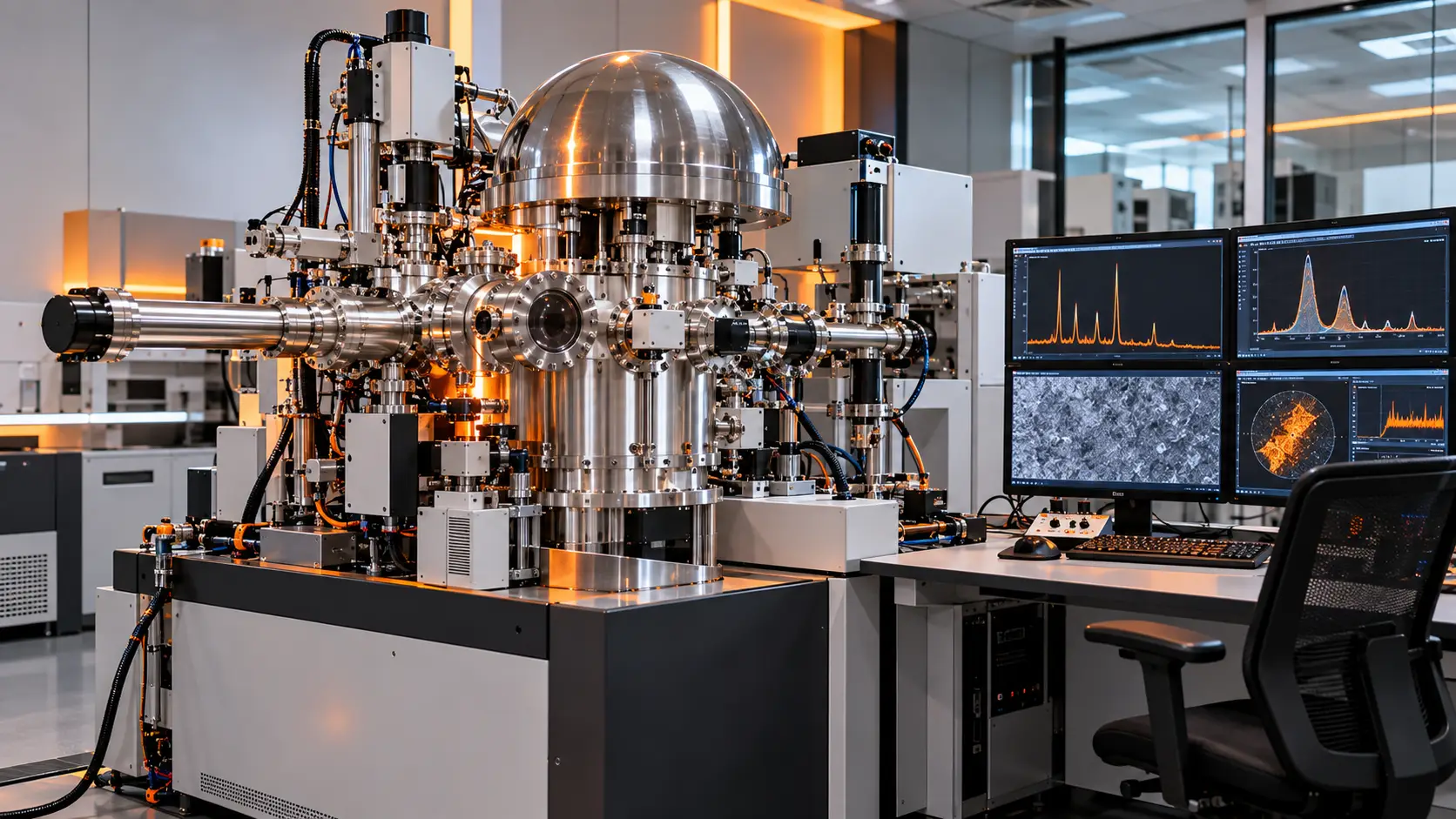
XPS analysis India uses X-ray photoelectron spectroscopy to determine the elemental composition and chemical states of a material’s near-surface region. It can distinguish surface elements, oxidation states and bonding environments, helping investigate coatings, thin films, oxides, corrosion layers, contamination and surface treatments when samples are suitable for ultra-high-vacuum measurement.
Surface elemental composition, chemical states, oxidation states, bonding environment, depth-related chemistry, and contamination.
Coatings, thin films, semiconductors, corrosion layers, polymers, catalysts, oxides, nanoparticles, and treated surfaces.
Share the material, surface condition, expected elements, coating thickness, contamination concern, and chemical-state objective.
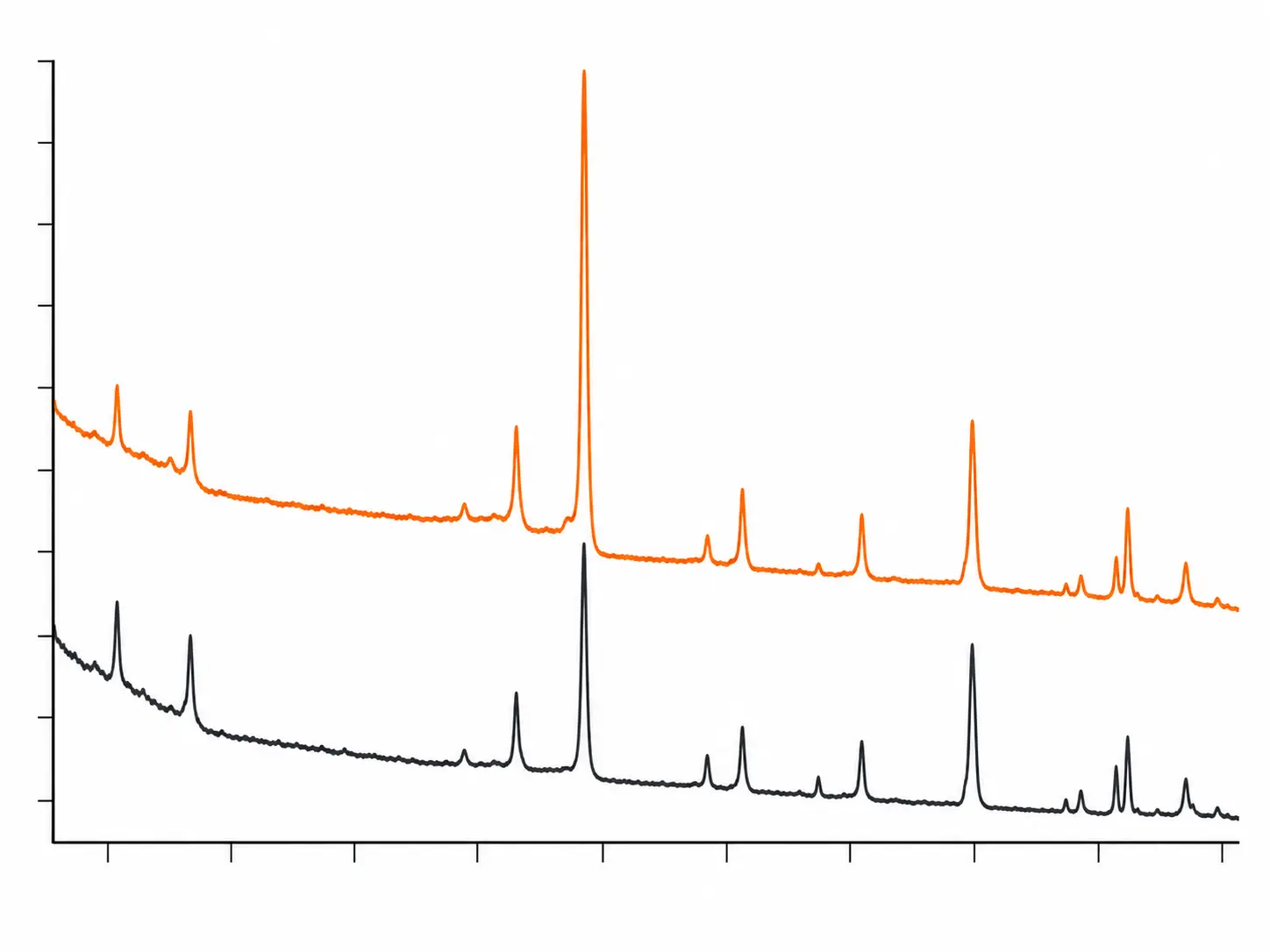
XPS irradiates a surface with X-rays and measures the kinetic energy of emitted photoelectrons. The resulting binding-energy spectrum provides information about the elements present and their chemical environments.
XPS is surface-sensitive, and interpretation depends on sampling depth, charge compensation, vacuum compatibility, surface cleanliness, calibration, peak fitting, and sample geometry.
The appropriate XPS route depends on surface chemistry, expected elements, coating or oxide condition, charging behavior, and whether survey or high-resolution chemical-state data are required.
Screen the near-surface region for detectable elements and identify the main photoelectron peaks present.
Examine core-level peaks and fitted components to investigate oxidation states and chemical bonding environments.
Support coating, oxide, corrosion, surface-treatment, contamination, and selected depth-related investigations where suitable.
X-rays illuminate a sample inside an ultra-high-vacuum chamber. Photoelectrons emitted from the surface are collected and analyzed according to their kinetic energy.
The measured energy is converted to binding energy, allowing elemental peaks and chemical-state components to be interpreted. A survey scan provides an overview, while high-resolution scans focus on selected elements.
Tap a component to see its role in XPS analysis.
The sample is placed under ultra-high vacuum, X-rays excite the surface, emitted photoelectrons are energy-analyzed, and survey or high-resolution spectra are interpreted for elemental composition and chemical state.
High-resolution XPS focuses on selected core-level regions and can separate overlapping chemical-state contributions through appropriate peak fitting and interpretation. Changes in binding energy or component intensity may indicate oxidation, bonding, surface treatment, or chemical-environment differences.
Reliable interpretation depends on calibration, charging control, background selection, fitting constraints, reference chemistry, and the surface condition of the sample.
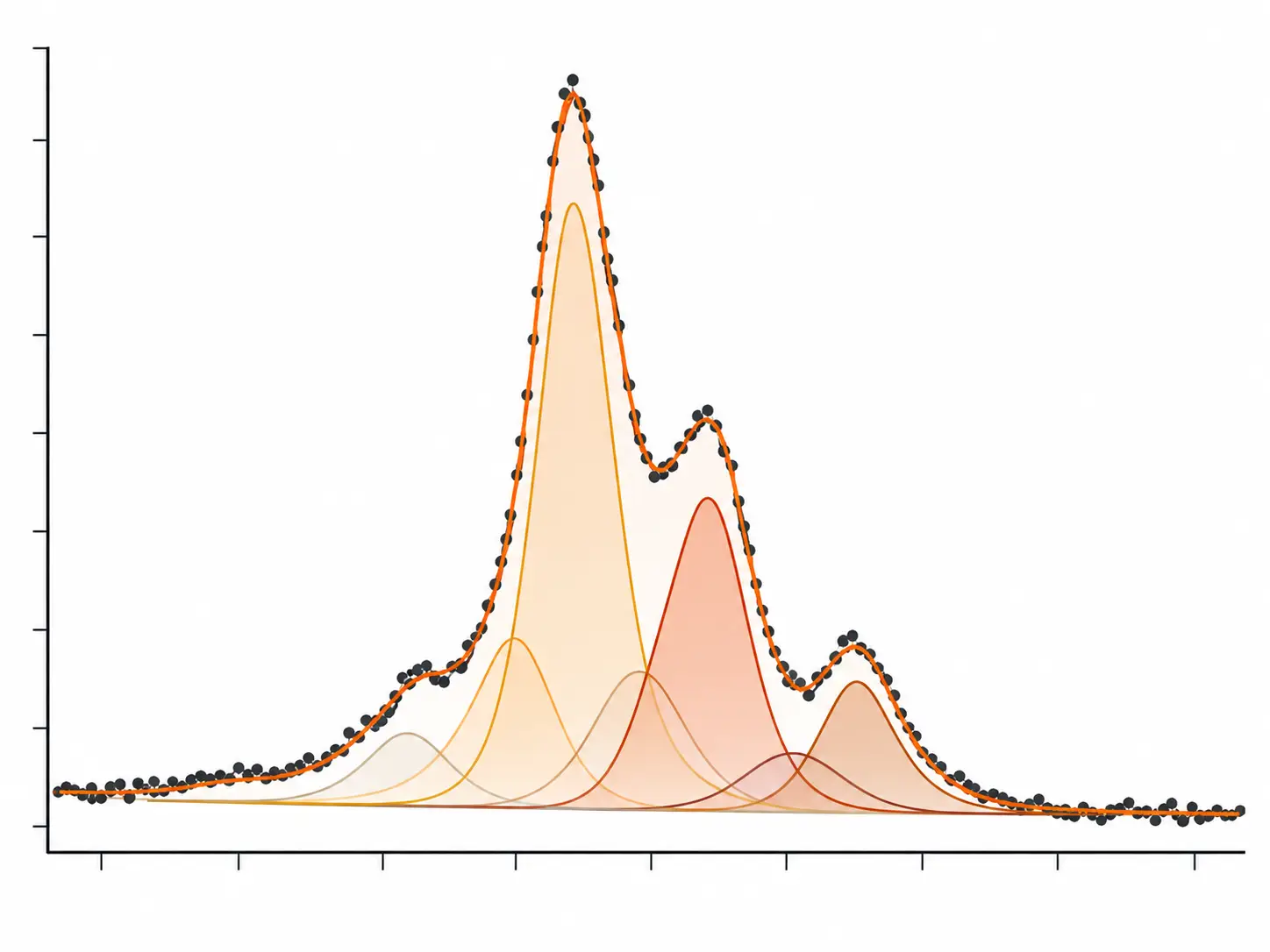
XPS interpretation usually starts with a survey scan to establish which surface elements are detectable. Selected core-level regions can then be collected at higher resolution when chemical-state information is needed. Binding-energy positions, peak shapes, relative intensities and fitted components are considered together rather than in isolation.
For coatings, oxides and treated surfaces, the result is most useful when the measured spectrum is compared with the expected chemistry, reference materials or a suitable untreated condition. Charge compensation, calibration, background selection and peak-fitting constraints can materially affect the interpretation, so the analytical objective should be agreed before measurement.
Surface cleanliness, charging, vacuum compatibility, sample geometry, coating thickness and the measurement objective all influence how useful the final spectrum will be.
Particles, residues, fingerprints or uncontrolled surface exposure can introduce chemistry that does not represent the intended material surface.
Insulating or partially insulating samples may require charge compensation and appropriate referencing before chemical-state interpretation.
Sample size, flatness, coating thickness and exposed regions should be considered when planning surface-sensitive measurements.
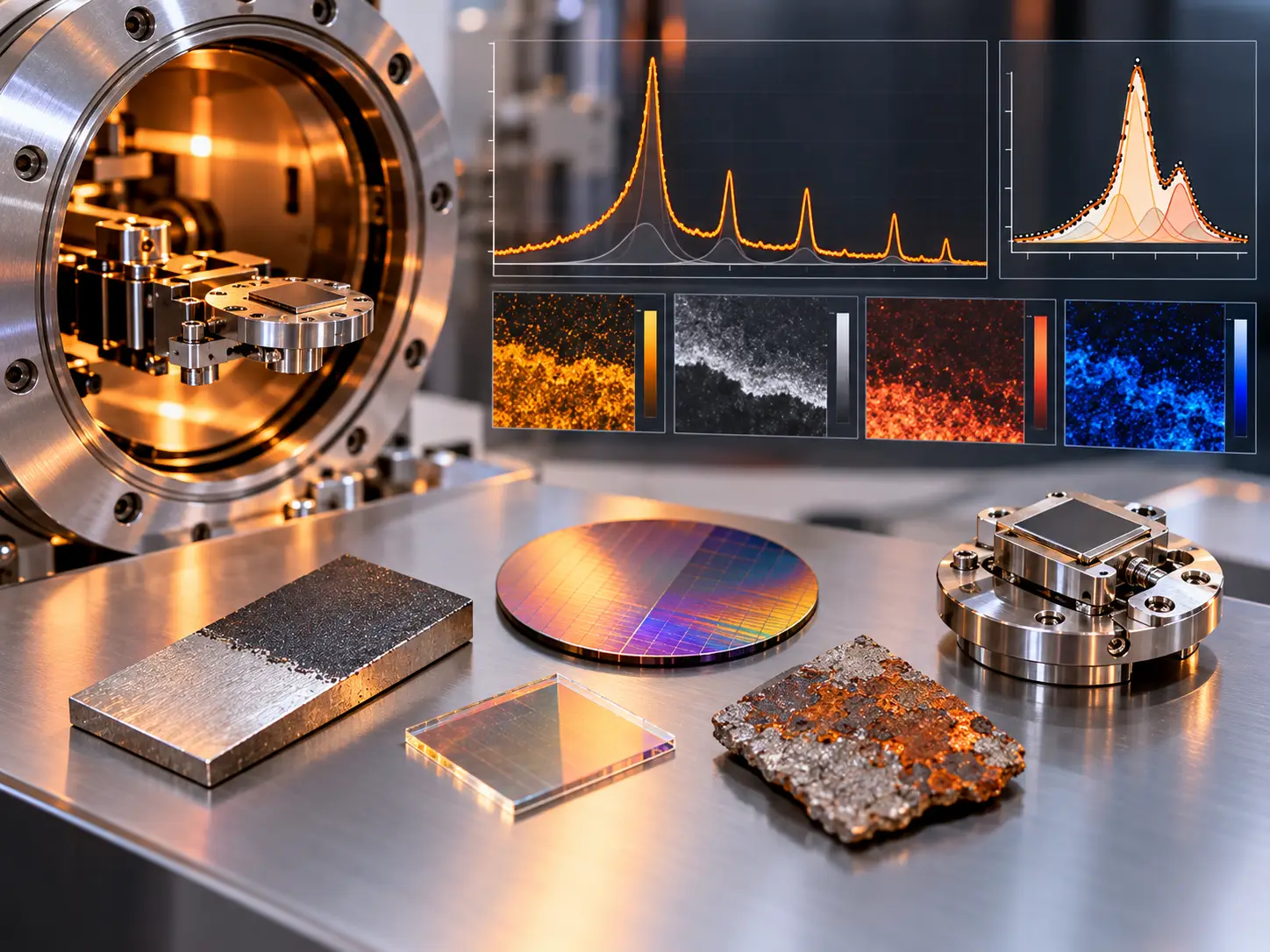
XPS is used when near-surface composition and chemical state are central to understanding performance, processing, adhesion, corrosion, contamination, or treatment effects.
Surface chemistry, oxidation, adhesion-related chemistry, contamination, and treatment verification.
Surface composition, oxide chemistry, bonding states, contamination, and process-related changes.
Oxide, hydroxide, corrosion-product, passivation, and treated-surface investigations.
Organic residues, surface deposits, process contamination, and unknown surface chemistry.
XPS planning depends on vacuum compatibility, surface condition, expected elements, sample geometry, charging, and the required chemical-state information.
Tell us the material, surface condition, dimensions, expected elements, coating or oxide information, and objective.
Our technical team reviews vacuum compatibility, surface cleanliness, charging, geometry, and measurement requirements.
Discuss survey scans, core-level scans, charge referencing, depth-related work, and requested interpretation.
Receive survey spectra, high-resolution spectra, elemental composition, fitted chemical states, and agreed documentation.
XPS analysis is used to investigate near-surface elemental composition, chemical states, oxidation states, bonding environments, coatings, thin films, corrosion layers, surface treatments, and contamination.
XPS may be suitable for coatings, thin films, metals, semiconductors, polymers, oxides, catalysts, corrosion layers, treated surfaces, and other samples compatible with ultra-high-vacuum measurement.
A survey scan provides a broad overview of detectable surface elements. A high-resolution scan focuses on selected core-level regions to investigate chemical-state or bonding-environment differences.
Yes. XPS can support oxidation-state and chemical-state analysis through calibrated binding-energy positions, peak shapes, fitted components, and appropriate chemical references.
Share the material, surface condition, dimensions, expected elements, coating or oxide information, contamination concern, vacuum sensitivity, and whether you need survey, high-resolution, or depth-related information.
Share a few details for a technical review, or speak directly with our consultant by phone or WhatsApp.
Just a few details — our technical team will guide you.