
TGA objectives
Thermal stability, moisture, solvent loss, decomposition stages, oxidation behavior, filler content, and final residue.

TGA and DSC thermal analysis measures how a material responds to controlled temperature change. TGA can investigate mass loss, decomposition, moisture, oxidation, and residue, while DSC can identify glass transition, melting, crystallization, curing, and other heat-flow events in suitable samples.
Thermal stability, moisture, solvent loss, decomposition stages, oxidation behavior, filler content, and final residue.
Glass transition, melting, crystallization, curing, phase transitions, heat capacity, and thermal history.
Share the material, expected transition or degradation range, sample mass, atmosphere requirement, and analytical objective.
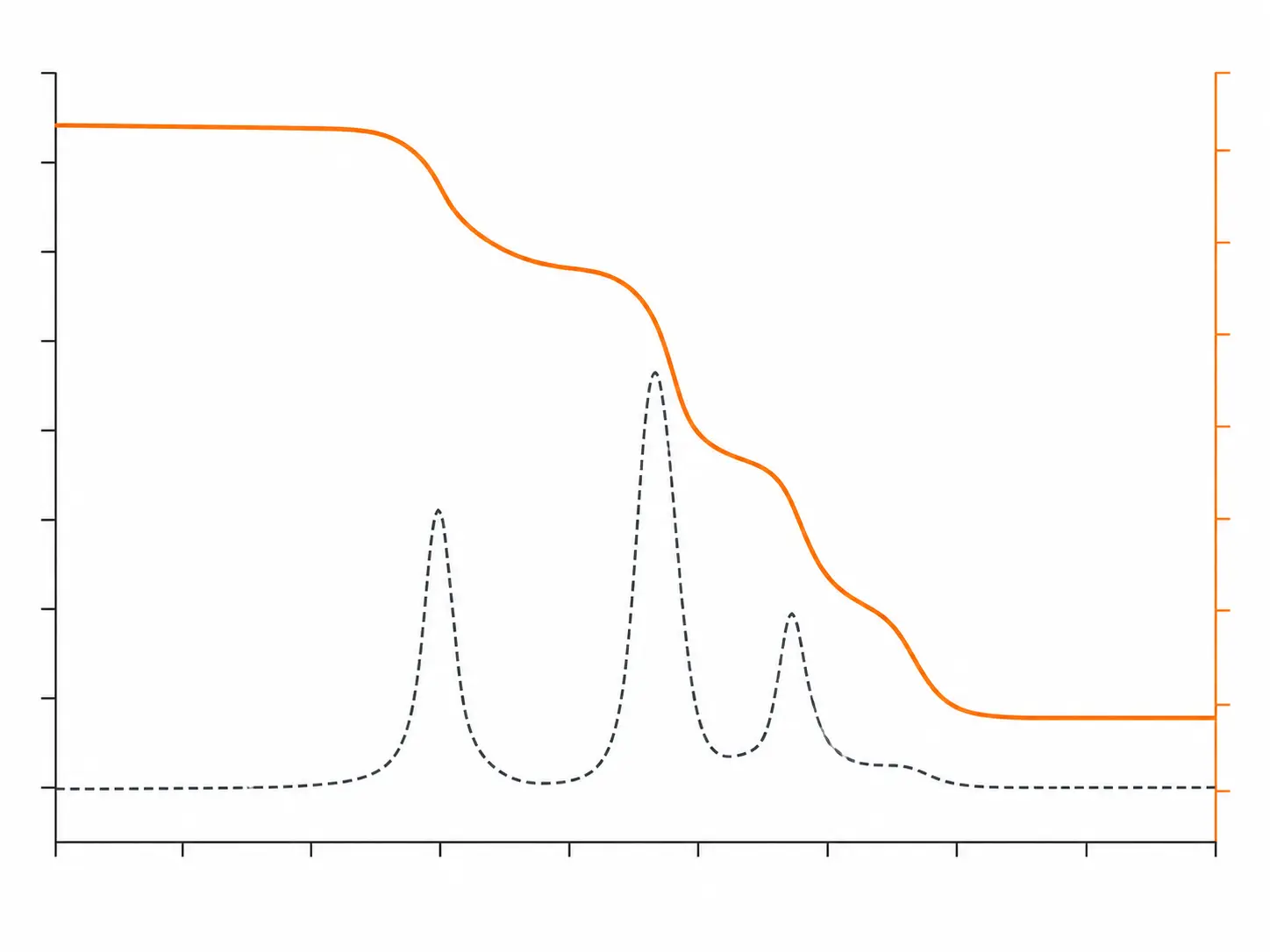
Thermogravimetric analysis records the change in sample mass while the sample follows a controlled temperature program. The resulting curve can show when volatile components leave, when decomposition begins, how many mass-loss stages occur, and how much residue remains.
TGA interpretation depends on heating rate, atmosphere, sample mass, pan type, temperature range, and the material’s thermal history.
The appropriate route depends on whether the primary question concerns mass change, heat flow, thermal transitions, decomposition, curing, or a combination of TGA and DSC behavior.
Investigate onset of mass loss, multistage decomposition, volatilization, oxidation, and thermal stability under selected conditions.
Use DSC heat-flow response to investigate glass transition, melting, crystallization, solid-solid changes, and thermal history.
Support formulation, polymer, resin, coating, catalyst, and advanced-material studies involving curing or heat-related reactions.
A small sample is placed in a controlled thermal-analysis instrument and exposed to a programmed temperature profile. The instrument records either mass change, heat flow, or both depending on the selected method.
Atmosphere, heating rate, sample mass, pan type, and temperature range are selected according to the material and analytical objective.
Tap a component to see its role in TGA / DSC thermal analysis.
The sample is loaded into a suitable pan, the instrument applies the selected temperature program and atmosphere, sensors record mass or heat-flow response, and the resulting curves are interpreted against the material and requested objective.
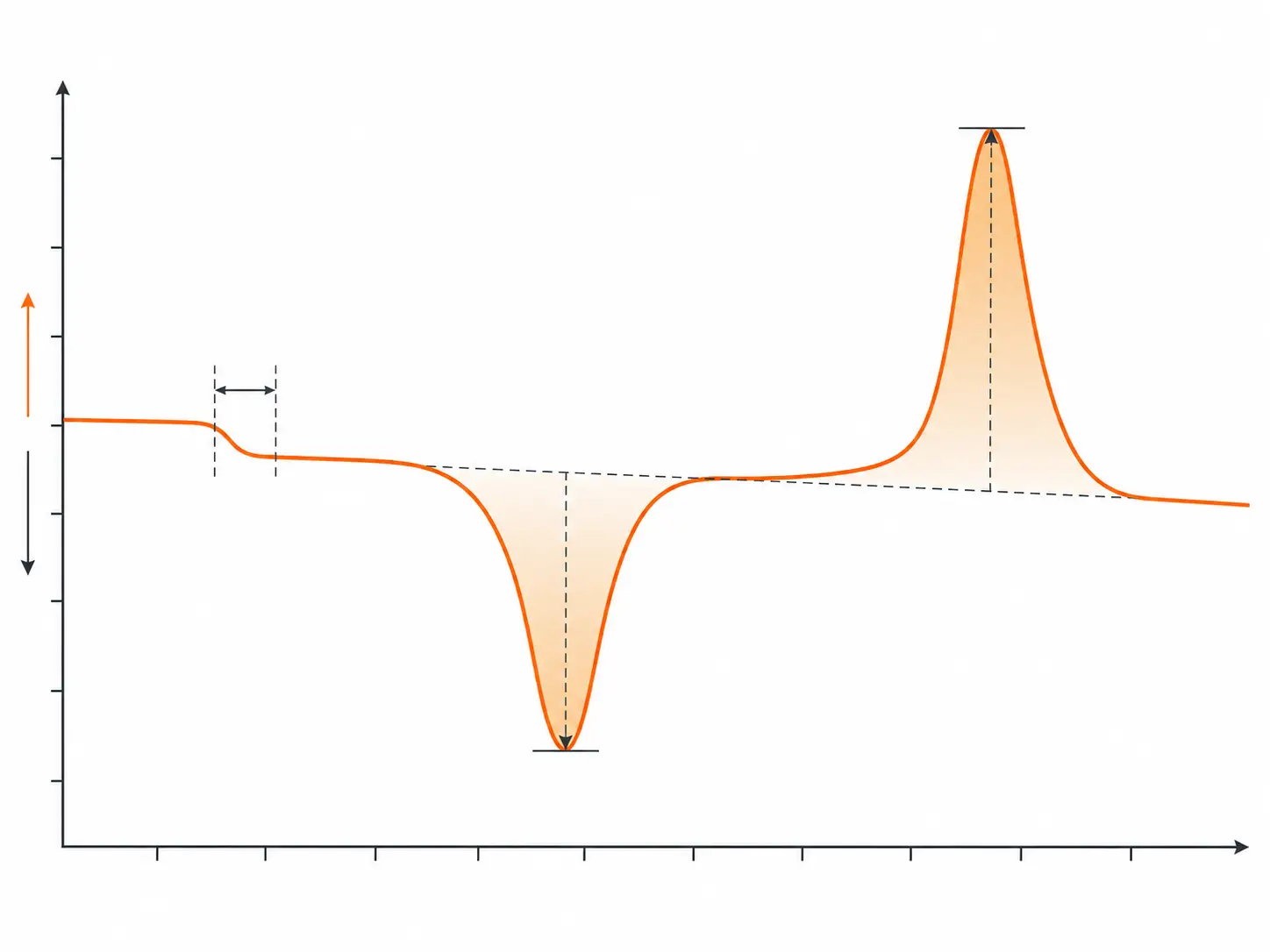
DSC measures the difference in heat flow between a sample and reference as temperature changes. Heat-flow events can indicate glass transition, melting, crystallization, curing, phase change, or other thermal behavior.
Interpretation depends on heating and cooling cycles, heating rate, sample mass, pan configuration, atmosphere, and the material’s thermal history.
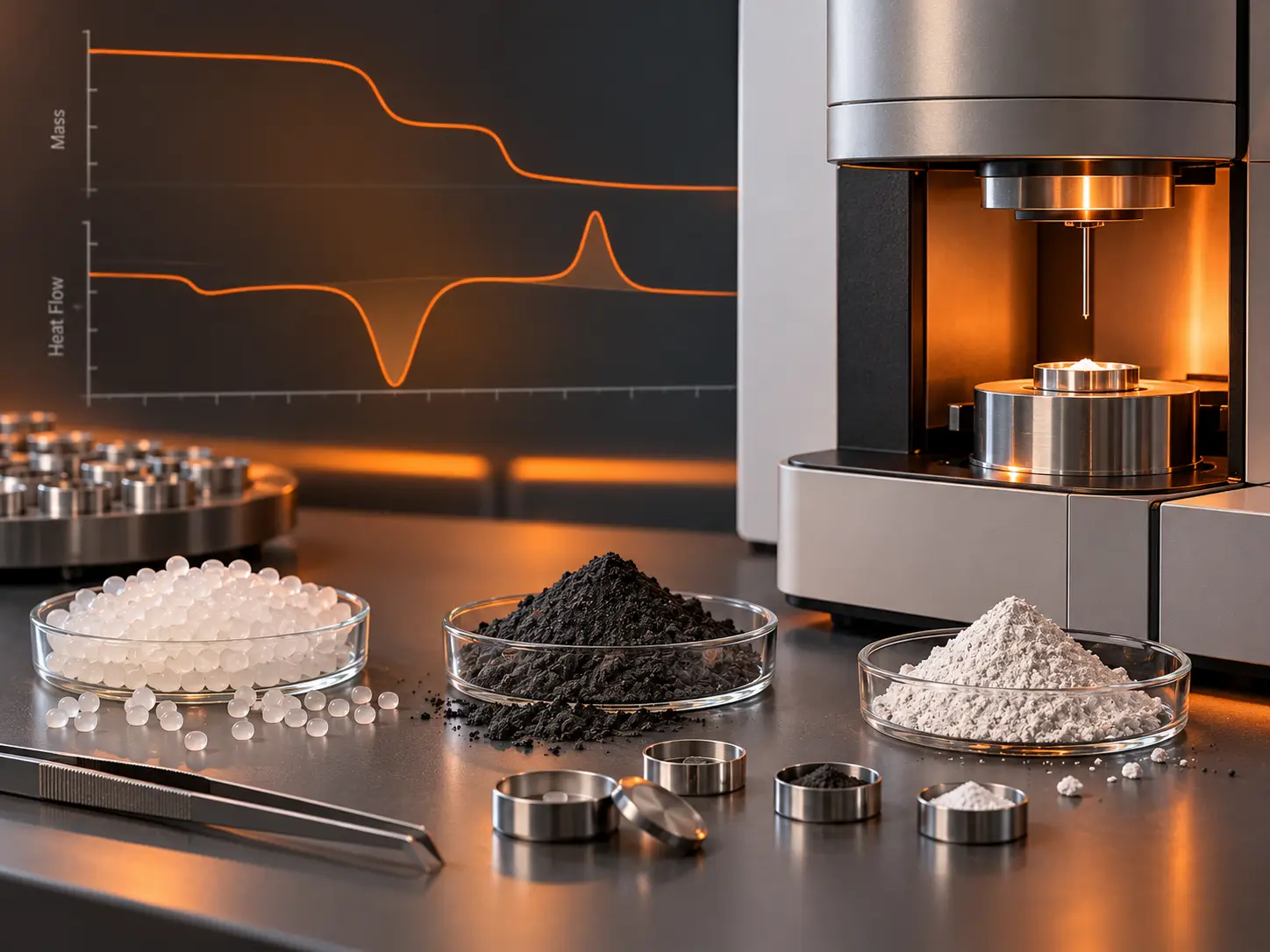
TGA and DSC are used when heat exposure, thermal stability, decomposition, phase transition, or reaction behavior is important to a materials or product decision.
Decomposition, glass transition, melting, curing, additives, filler content, and formulation comparison.
Thermal stability, solvent or binder behavior, decomposition, and heat-related material response.
Curing, organic content, thermal stability, degradation, and formulation or process comparison.
Moisture, volatile content, decomposition, oxidation, residue, and thermal-treatment behavior.
Thermal-analysis planning depends on the expected temperature range, atmosphere, sample mass, and objective. Share the details first so the method can be reviewed.
Tell us the material, mass available, expected transitions, thermal history, and objective.
Our technical team reviews sample quantity, temperature range, atmosphere, and method suitability.
Discuss temperature program, heating or cooling cycles, atmosphere, pans, and requested output.
Receive thermal curves, transition observations, mass-loss data, residue information, and agreed documentation.
TGA analysis is used to investigate thermal stability, moisture or solvent loss, decomposition stages, oxidation behavior, filler content, and final residue as sample mass changes with temperature.
DSC analysis is used to investigate heat-flow events such as glass transition, melting, crystallization, curing, phase transitions, and thermal-history effects.
TGA or DSC may be suitable for polymers, resins, coatings, powders, catalysts, battery materials, composites, pharmaceuticals, ceramics, and other materials that can be tested within the required temperature and atmosphere conditions.
The required sample amount depends on the instrument method, pan, material, expected signal, and requested analysis. Share the available quantity during the suitability review so the appropriate route can be confirmed.
Share the material type, available mass, expected decomposition or transition range, atmosphere requirement, thermal history, and whether you need TGA, DSC, or both.
Share a few details for a technical review, or speak directly with our consultant by phone or WhatsApp.
Just a few details — our technical team will guide you.