
Suitable materials
Metals, alloys, ceramics, powders, catalysts, battery materials, coatings, thin films, minerals, and crystalline compounds.
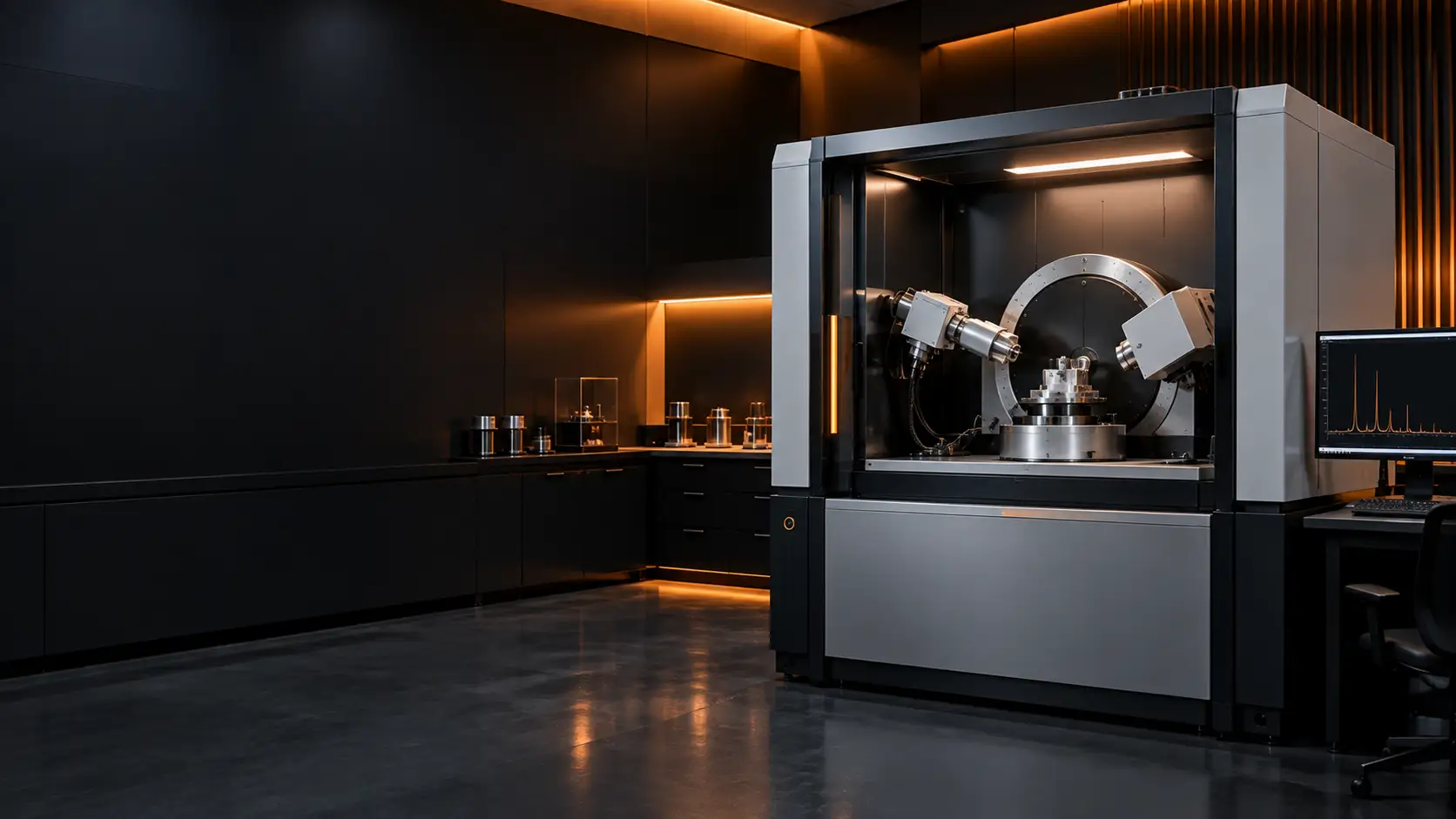
G-Hexa provides XRD analysis in India for phase identification, crystal structure analysis, crystallinity assessment, diffraction-pattern interpretation, and material verification. Our Bengaluru-based team reviews your sample and objective to recommend the appropriate XRD analysis route.
Metals, alloys, ceramics, powders, catalysts, battery materials, coatings, thin films, minerals, and crystalline compounds.
Phase identification, crystallinity, crystal structure, peak comparison, material verification, and diffraction-pattern interpretation.
Share your material type, sample condition, approximate quantity, objective, and any target phase or comparison requirement.
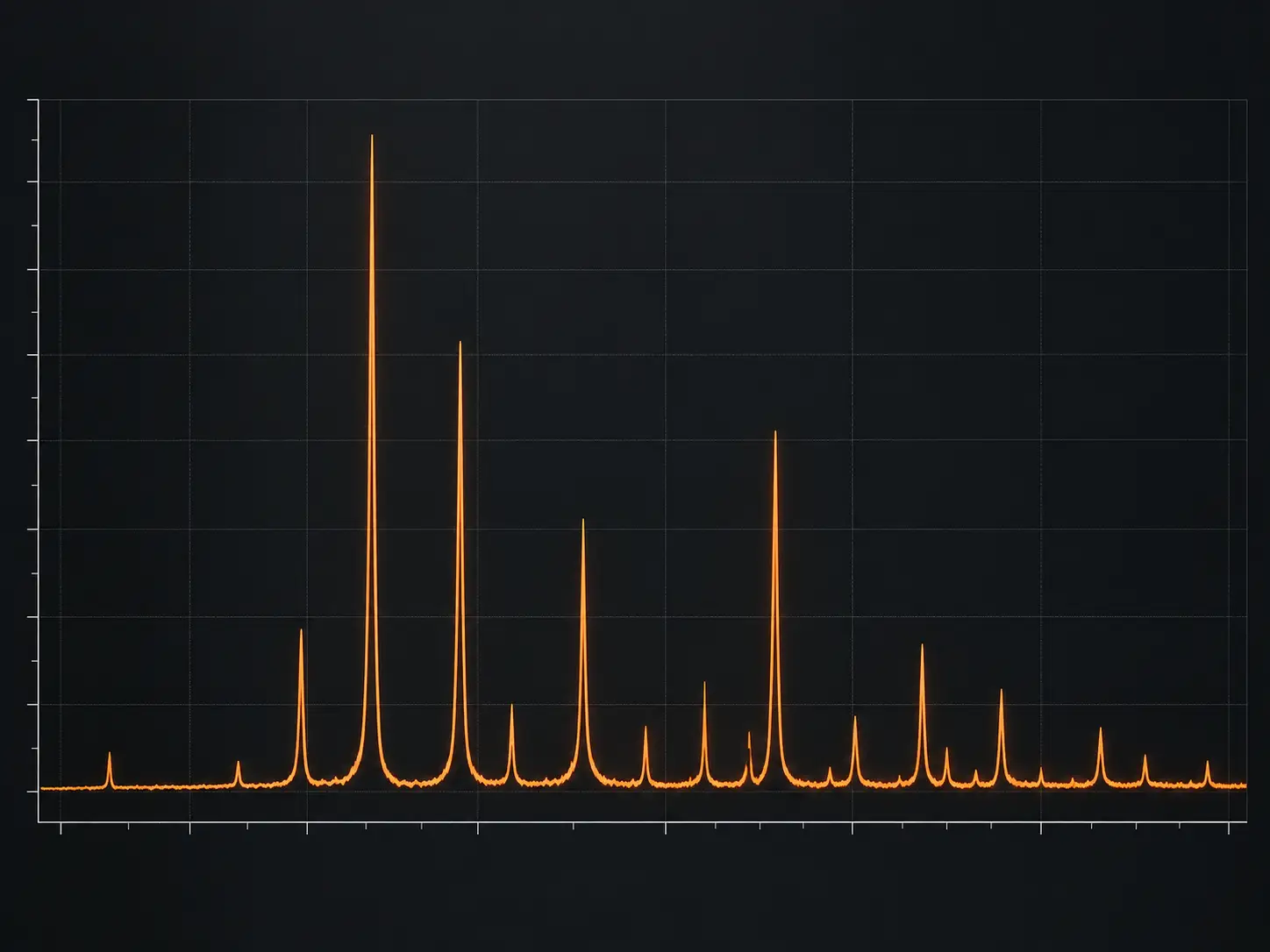
XRD analysis measures how X-rays diffract from ordered atomic planes in a material. The resulting pattern can help identify crystalline phases, compare samples, assess crystallinity, and investigate changes in crystal structure.
Peak position, relative intensity, width, and pattern shape are interpreted in relation to the material, sample preparation, measurement conditions, and the question being investigated.
The appropriate analysis route depends on whether you need phase identification, crystallinity comparison, structure interpretation, or application-focused material verification.
Compare diffraction peaks with suitable reference information to investigate the crystalline phases present in a suitable sample.
Assess pattern features and sample-to-sample changes related to crystalline structure and degree of order.
Compare untreated and processed materials, batches, phases, or application samples to investigate structural changes.
An X-ray source directs an incident beam toward a prepared sample. In a crystalline material, atomic planes can diffract the beam at specific angles.
A detector records the diffracted intensity as the measurement angle changes. The resulting pattern is then interpreted to investigate phase identity, crystallinity, and structural differences.
Tap the source, crystal sample, or detector to see its role in XRD.
The source produces an incident X-ray beam. The prepared crystal sample diffracts part of that beam according to the spacing and orientation of its atomic planes. The detector records diffracted intensity as the angle changes, producing a pattern that can be interpreted for phase and crystal-structure information.
Different crystalline phases produce characteristic diffraction features. Comparing peak positions and relative intensities can help investigate whether a target phase is present and whether processing or composition has changed the pattern.
Pattern interpretation should account for sample preparation, preferred orientation, peak overlap, amorphous content, and the quality of available reference information.
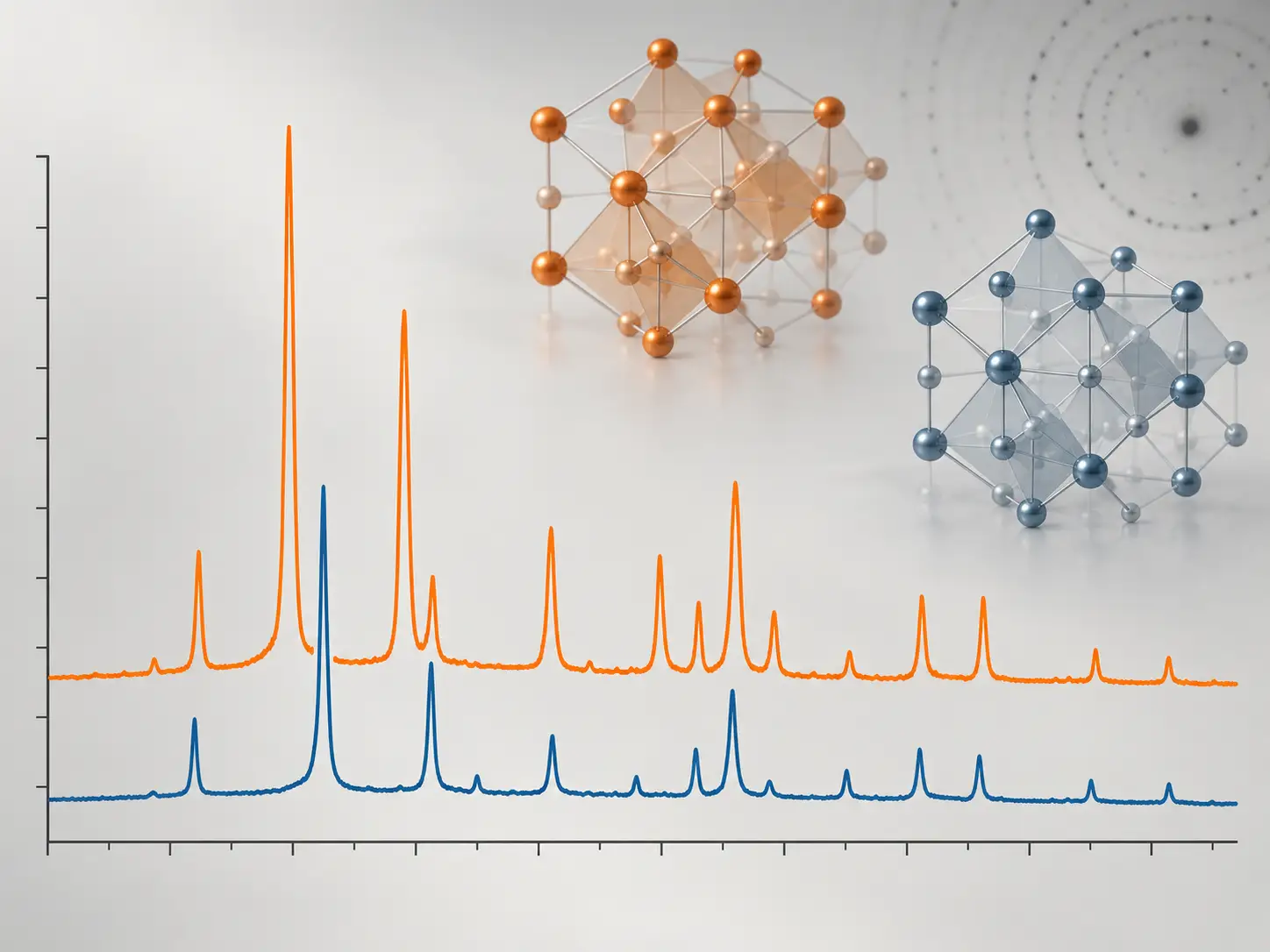
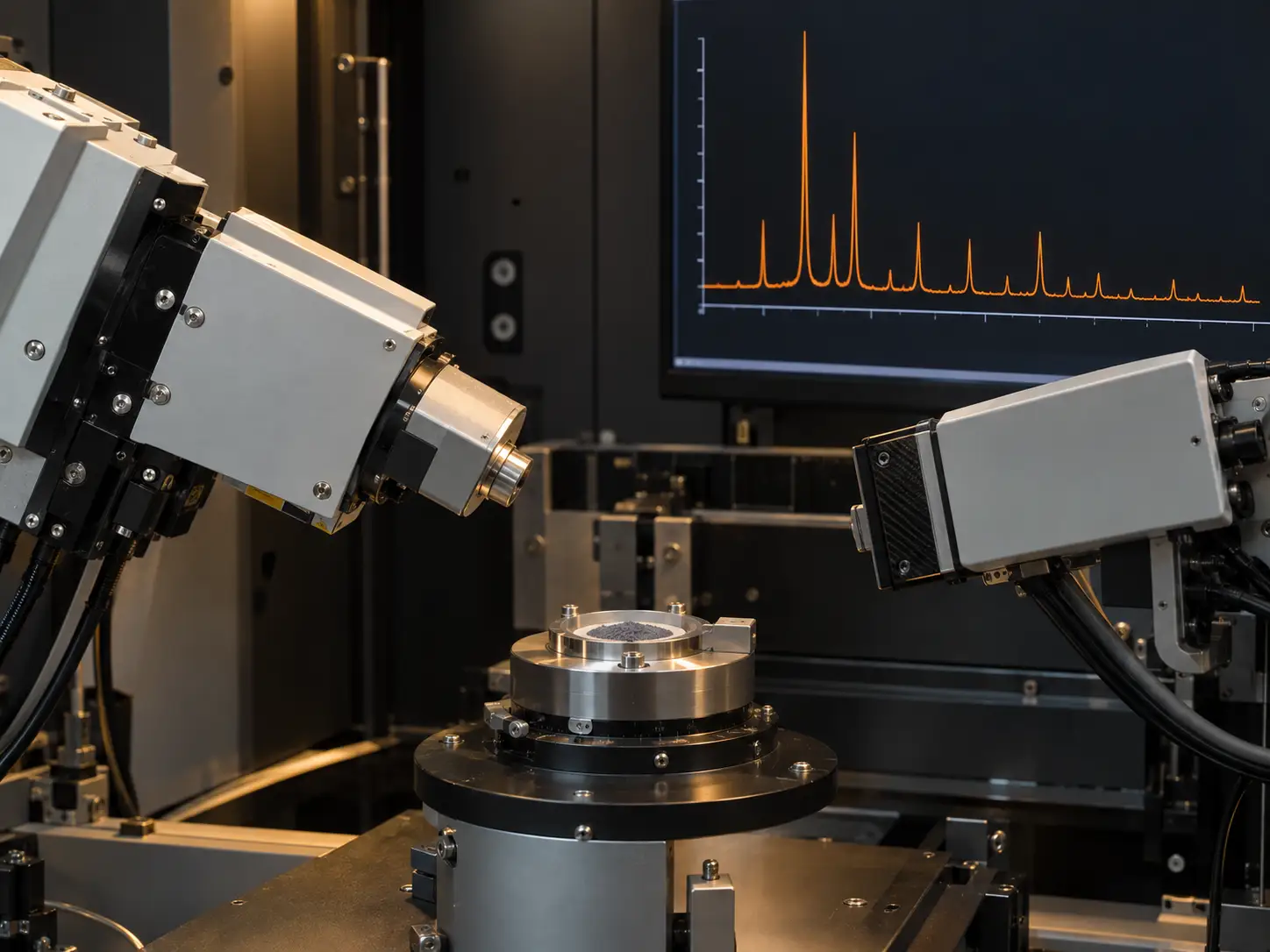
XRD supports research, development, quality evaluation, and material-verification questions where crystalline phases or structural changes are important.
Phase changes, crystallinity, structural evolution, and comparison of electrode materials.
Phase identification, material verification, and structure-related comparison.
Crystalline phase identification, powder comparison, and processing assessment.
Phase, crystallinity, texture, and structural evaluation where suitable.
Choose another G-Hexa characterization service when your sample requires complementary information about composition, bonding, microstructure, diffraction, or surface properties.
Investigate molecular vibrations, material phases, chemical structure, and related Raman signatures.
Explore functional groups, chemical bonding, and molecular signatures using infrared spectroscopy.
Investigate crystalline orientation, grain structure, phases, and microstructural relationships.
Share the sample details and the information you need from the diffraction pattern. The suitable preparation and analysis route are confirmed before measurement.
Tell us the material type, condition, approximate quantity, and technical objective.
Our technical team confirms whether XRD is appropriate and discusses sample preparation.
Send the prepared sample or coordinate submission based on the agreed route.
Receive the diffraction pattern, observations, and agreed interpretation or report outputs.
XRD analysis is used to investigate crystalline phases, crystal structure, crystallinity, material verification, and structural differences between samples. It is commonly applied to powders, metals, ceramics, battery materials, coatings, minerals, and other suitable crystalline materials.
XRD can help identify crystalline phases by comparing diffraction features with suitable reference information. Interpretation depends on sample preparation, peak overlap, amorphous content, preferred orientation, and the quality of the available data.
XRD may be suitable for powders, metals, alloys, ceramics, catalysts, battery materials, coatings, thin films, minerals, and crystalline compounds. Suitability depends on sample form, quantity, surface condition, and the required measurement.
XRD can reveal broad scattering features and may help compare amorphous or partially crystalline materials. The information available depends on the proportion of amorphous content, sample preparation, and the measurement objective.
Share the material type, sample form, approximate quantity or dimensions, expected phase or comparison, and the information you need from the analysis. Clear photographs and any reference composition are helpful where available.
Share a few details for a technical review, or speak directly with our consultant by phone or WhatsApp.
Just a few details — our technical team will guide you.